Some conversations leave you with a line you keep quoting for years. For Rebecca, this is one of them. Dr. Shyam Ranganathan, founder of YogaPhilosophy.com, joined the podcast during the 2024 perfectionism series, and the conversation has held up in every way that matters. They get into the difference between Western virtue ethics — which starts with finding the right person and doing what they say — and yoga's invitation to spend a lifetime practicing right doing as you understand it. They talk about why "the customer is always right" is a genuinely complicated idea when you're teaching something transformative, why yoga is inherently subversive and dissatisfaction is actually the doorway in, and what that means for how you market your work without compromising your ethics. And they get into leadership — the real kind, that requires vulnerability, healthy boundaries, and the willingness to be a serious student yourself. This is the final episode in the revisited conversations series, and it's a worthy close.
Read MoreYoga professionals are required to complete continuing education to maintain their credentials. Nobody has ever done the math on what that requirement actually costs over a career, or what it actually returns in earning potential. In this episode we put both numbers on the table — the real cumulative cost of continuing education across a yoga career, and the honest answer to whether those requirements serve the professional or the organizations that set them.
Read MoreThis is one of those conversations Rebecca keeps sending people back to — and for good reason. First recorded in March 2024, this discussion with Colice Sanders on perfectionism and activism in the yoga space holds up in every way that matters, and has only gotten more relevant since. Colice brings serious precision to the conversation — defining terms, naming the ways white supremacy culture shows up in yoga and social justice spaces, and making a clear-eyed case for why awareness without focused action is where we keep missing the mark. They also get into how perfectionism gets weaponized to police each other in yoga and activist communities, the difference between critique worth sitting with and shame designed to silence, and how moral superiority quietly infiltrates even the most well-intentioned spaces. An updated conversation with Colice is coming in July — things have shifted enough since 2024 that it was time. Start here first.
Read MoreIssue 1 of Inside Yoga Magazine is here — and in this episode, Rebecca walks you through what's inside, why she built it, and what she hopes it becomes for the yoga profession.
The Rebuild is the first issue of a trade publication designed to do something that doesn't exist yet: treat yoga professionals like the intelligent, serious people they are. That means original data, honest industry reporting, contributor voices from across the profession, and editorial writing that says the things that have needed saying for a long time.
In this episode you'll hear about the Real Hours Project and what the early data is showing about compensation and unpaid labor. You'll meet the contributors — Suzie Carmack, Jivana Heyman, and Stevie Inghram — and hear why their pieces belong together in the same issue. And you'll hear Rebecca talk about what it cost to write the pieces she wrote, and why she wrote them anyway.
This is the beginning of something. Come be part of it.
Read MoreThe yoga world's commitment to non-judgment, positive intent, and non-attachment is genuinely beautiful in a practice. In a profession, those same values have been used to silence legitimate grievances, protect institutions that should be held accountable, and make yoga professionals carry a collective harm privately that should have been named publicly. In this episode we say plainly what the industry has never said: you are allowed to feel taken advantage of. Because in many cases, you were. And naming that is not unspiritual. It is honest. And honesty is also a practice.
Read MoreThere is something true about this profession that almost nobody says out loud. Almost everyone who comes to yoga — and especially everyone who makes it their life's work — came here because they needed it. Because something in them needed regulating. In this episode we name what the yoga industry has never said collectively: your history is not a liability. It is your most important credential. And the fact that you came here to heal is not something to hide. It is the whole point.
Read MoreThe organizations governing the yoga profession care deeply about the practice. What they have never demonstrated a meaningful commitment to is the professional welfare of the people teaching it. In this episode we make a distinction nobody in this industry is making out loud — and explain why it changes everything about what you should expect from these institutions, what you're actually paying for, and what needs to be built.
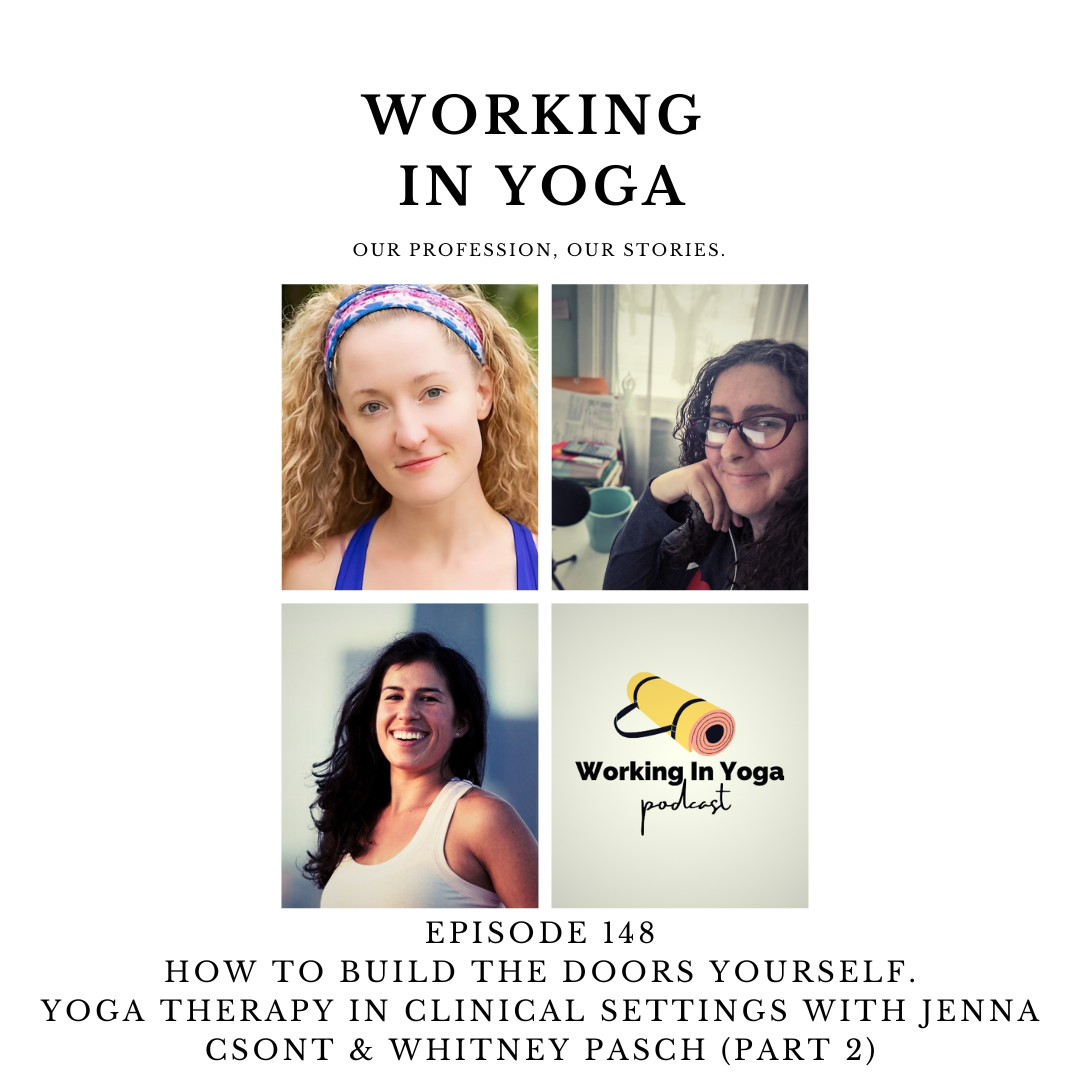
Read MoreIf Part 1 made you believe a clinical yoga therapy job was possible, Part 2 is going to show you how to start going after one. Jenna Csont and Whitney Pasch get into the practical side — networking in spaces where yoga professionals are still a new concept, the education that makes these opportunities available, reaching out to therapy centers, and why knowing how to clearly explain what yoga therapy is may be the most underrated professional skill you can develop. Rebecca also reflects on what Jenna's path represents: solo, ground-up, door-building work that most of us weren't warned we'd need to do. If you're a yoga therapist who wants to work in clinical or medical settings, this episode is required listening.
Read MoreEveryone told you to find your voice, build your brand, and develop your unique methodology. Nobody told you the order. In this episode, we talk about the sequence that the yoga industry never handed you — why you have to get better before you can get original, and why the pressure to skip that step is quietly crushing an entire generation of yoga professionals.
Read MoreThe organizations that set our standards, control our credentials, and claim to speak for yoga professionals are mostly run by people who have never built a career on the mat. In this episode, we name what that actually means — why it explains so much of what feels off, what you should stop expecting from these institutions, and what needs to change.
Read MoreYoga's missing career ladder doesn't just cost you professionally — it costs you financially. In this episode, Rebecca Sebastian names the specific, predictable ways the broken structure of the yoga industry transfers its costs onto individual workers: the training trap, the visibility myth, the body math nobody does, and the hidden overhead of patchwork income.
This is not a hustle episode. It's a clarity episode — for mid-career yoga professionals who are tired of blaming themselves for navigating terrain that was never mapped.
Includes a mention of the free Boring Money Starter Kit and the Make Money in Yoga Boring working seminar on March 31st.
Read MoreWhat does it look like to take your yoga training beyond the studio and into real community care work?
In this episode, Rebecca talks with returning guest Shelly Auld, a wellness coordinator working in a North Minneapolis school district. Shelly shares how she built a program that supports educators and staff through nervous system regulation, co-regulation, and accessible movement—and how that work is already impacting staff retention and wellbeing.
This conversation is a powerful reminder that yoga professionals are needed in schools, healthcare, corporate environments, and beyond. It’s not about the perfect certification—it’s about applying your skills where people actually need them.
Read MoreYoga has no career ladder.
And for many mid-career yoga professionals, that realization arrives quietly—through burnout, confusion, or the feeling that the work should make more sense by now.
In this solo episode, Rebecca explores why yoga careers are structurally non-linear, how training and personal branding have been positioned as substitutes for real professional pathways, and why so many skilled teachers and therapists end up blaming themselves for systemic gaps.
This is not an episode about hustling harder, pivoting faster, or waiting for the industry to be rescued.
It’s a conversation about clarity:
Why yoga offers inspiration without infrastructure
How burnout is often grief, not failure
What happens when careers are built without shared support or advocacy
And how to redefine progress in care-based work without chasing legitimacy
This episode also introduces The Back Room, a private professional space for yoga workers who want reflection, strategy, and sustainability—without high-ticket coaching or industry drama.
A guided reflection sheet accompanies this episode inside The Back Room for listeners who want to sit with these questions more deeply.
Read MoreWhat happens when an industry grows faster than its infrastructure? In this solo episode, Rebecca explores how yoga professionals ended up navigating public discourse, expensive coaching, and deeply personal career decisions all at once—and why we desperately need quieter, more intentional spaces to think, reflect, and build what comes next.
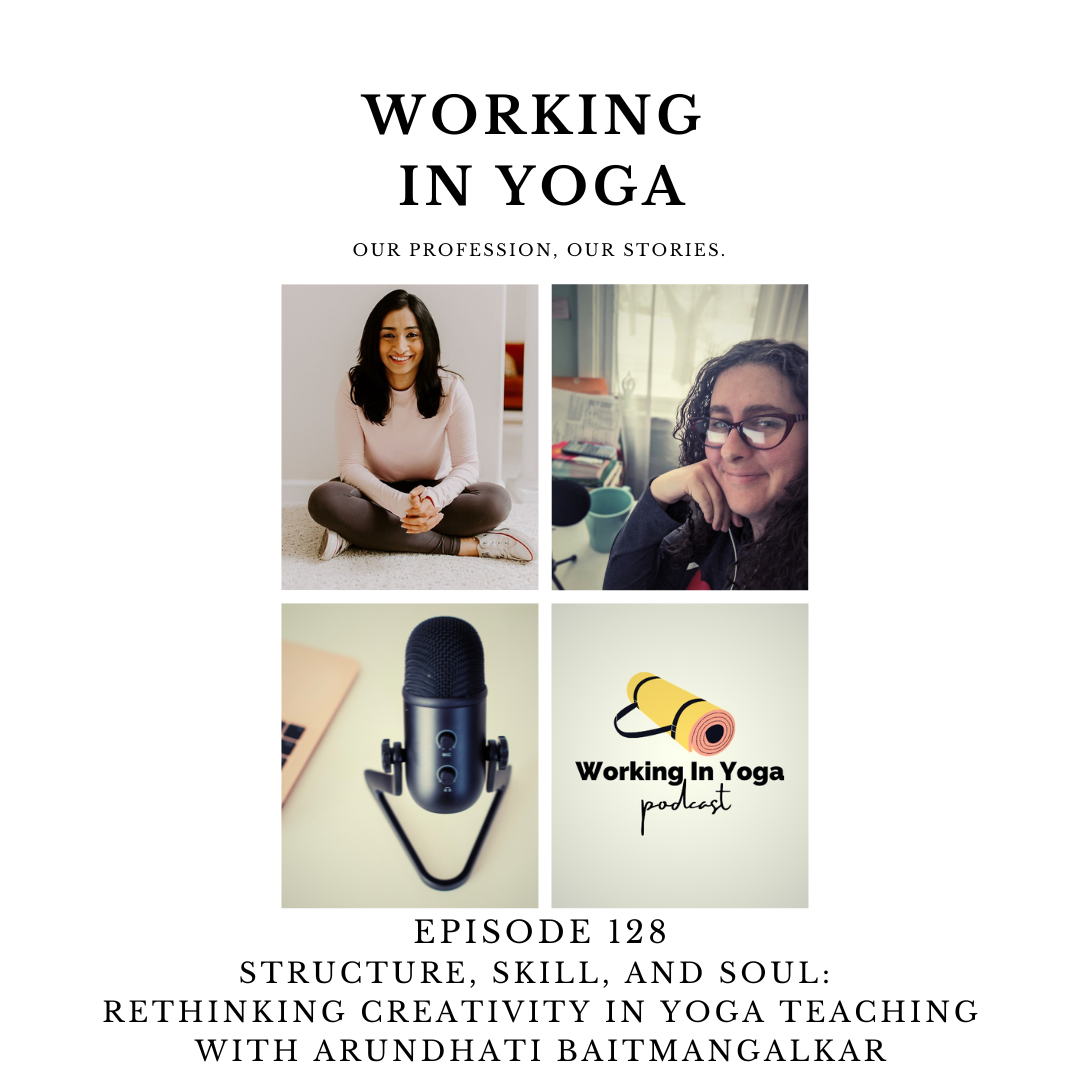
Read MoreWhat if creativity in yoga isn’t about novelty—but about depth, structure, and purpose? In this episode, we unpack the difference between engagement and entertainment, why foundations matter, and how knowing your “why” shapes sustainable, skillful teaching.
Read MoreWhat does it mean to be creative royalty? In this episode, Rebecca and Cheri Dostal Ryba explore how yoga professionals can tap into curiosity, move past fear, and stay grounded through the ups and downs of creative work. Whether you’re building a yoga business, creating new classes, or just trying to feel brave enough to share your ideas, this episode reminds you that you don’t have to be perfect to create something powerful.
Read MoreEver feel the tug between tradition and innovation in your teaching? In this episode, we get real about creative tension, versatility, and the art of making your yoga practice your own. We’re talking curated inspiration, themed classes, and the power of choosing creativity—on and off the mat.
Read More