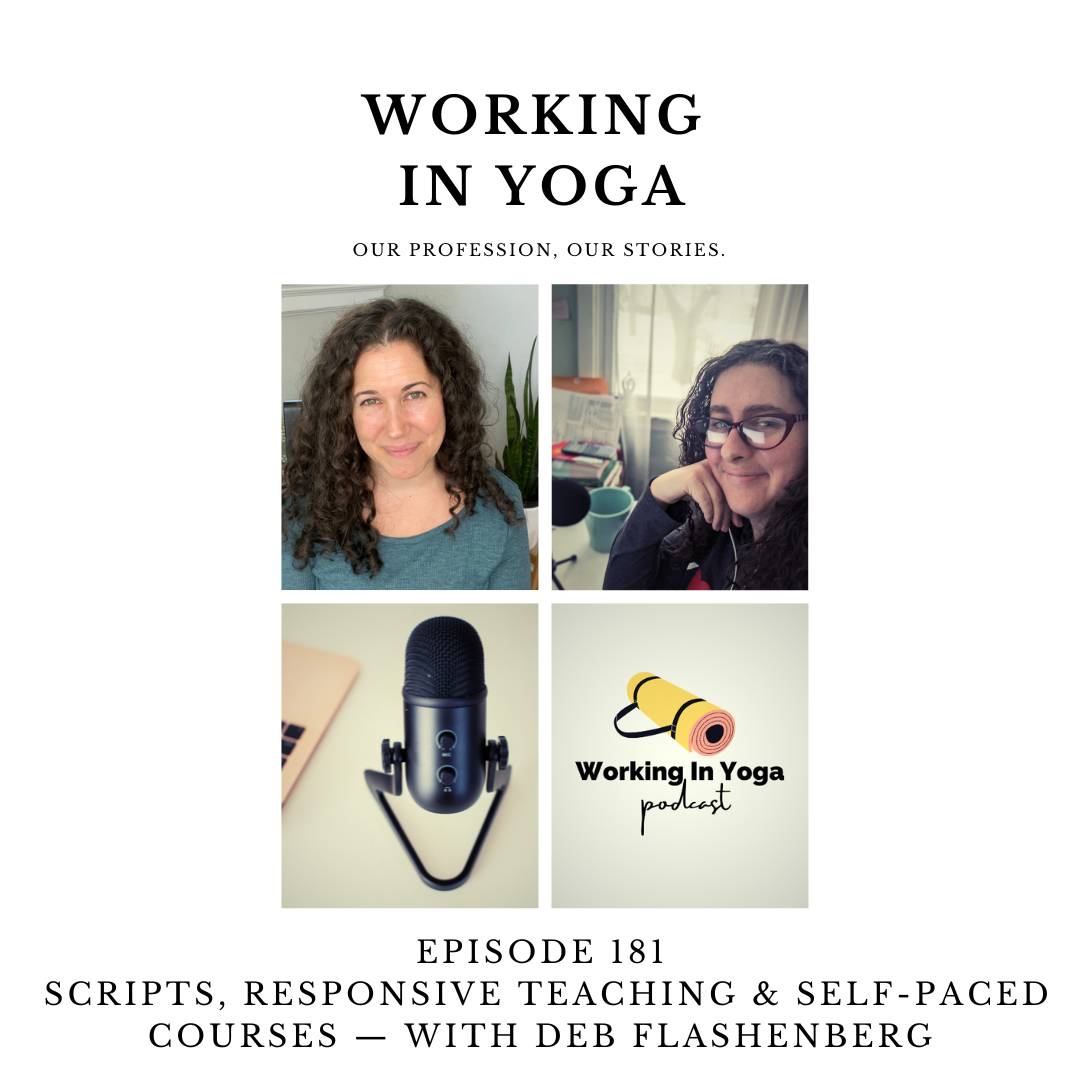
This is the kind of conversation Rebecca wants to do more of — two people parsing out the nuance of how we actually do this work, in real time. Deb Flashenberg is back, and this time she and Rebecca get nerdy about scripts, responsive teaching, and what it really means to be present with the people in the room. They talk about why giving teachers a framework serves them better than handing them a script, what gets lost when AI writes your sequences, and the particular challenge of self-paced courses that have no relational feedback loop built in. They also get into the reps — the honest reality that there is no shortcut to learning to teach, and that teacher training exists precisely to give people a safe place to mess up and figure it out. If you've ever wondered whether scripts are a crutch or a tool, or how to develop the skill of actually seeing your students, this one is for you.
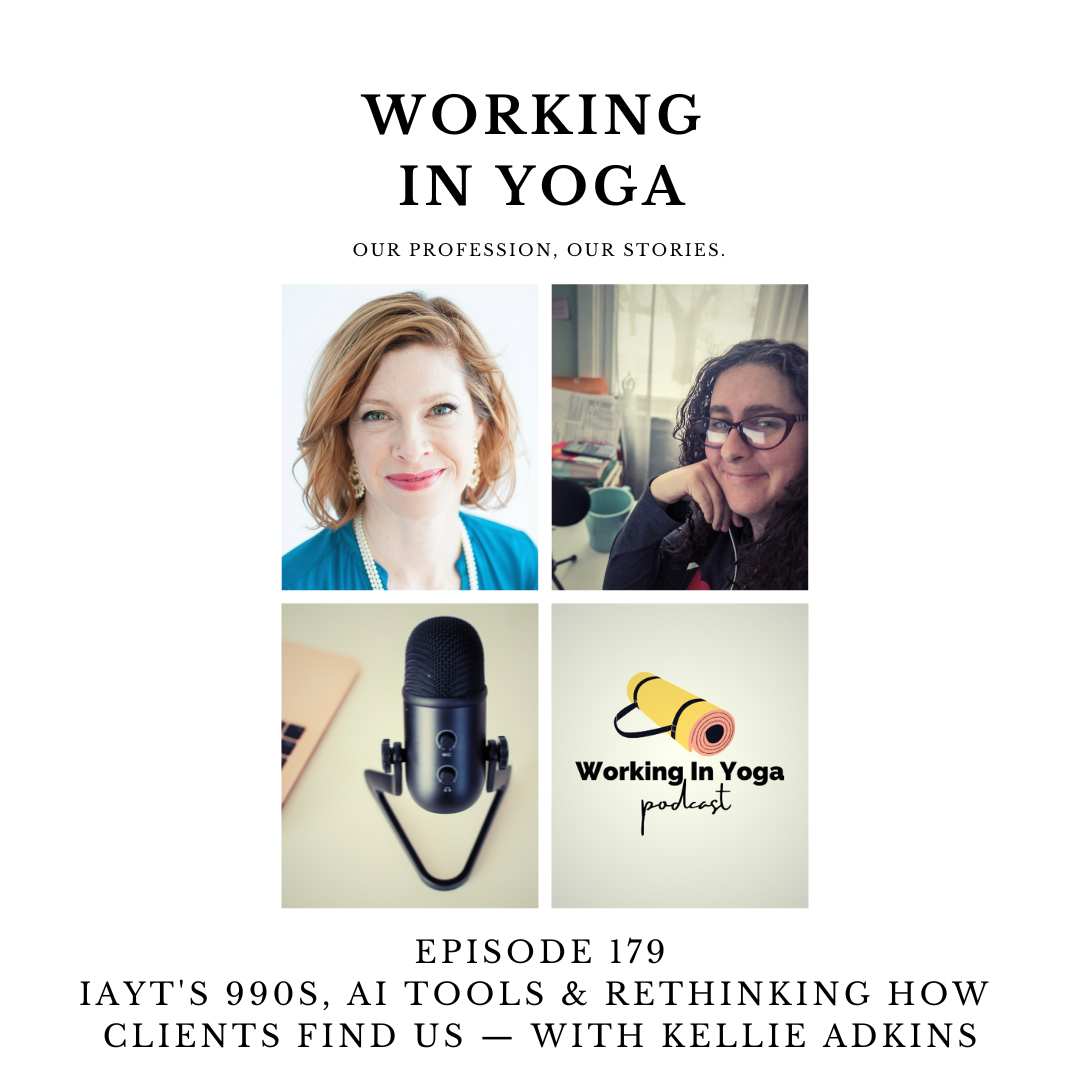
Read MoreKellie Adkins did her homework — including a close look at the IAYT's 990s — and she brings the receipts. In this conversation with Rebecca, they get into the financial reality behind the C-IAYT credential: what yoga therapists are actually earning (around $10K a year, against the cost of a yoga therapy degree), why significant numbers of credentialed yoga therapists are choosing not to renew, and what the IAYT's own financial losses over recent years say about the organization's trajectory. They also talk about the structural problem at the root of all of it — an industry that trained far more people than it ever built jobs for, and the obligation legacy professionals have to charge enough that entry-level yoga therapy can actually be a livable wage. Kellie also brings something genuinely useful to the conversation: a working accountability model built around DEIA, lineage, and codes of conduct with real removal processes — and hire.yoga, her platform designed to connect yoga therapists with actual employment opportunities. Plus a conversation about AI tools and how yoga professionals can use them well.
Read MoreA lot of you have had questions about the American Yoga Council — what it is, what it does, and whether it's worth your attention. So Rebecca went straight to the source. AYC founder and CEO Andrew Tanner joins the podcast for a straightforward conversation about what the organization is building and why: certification vs. registry, accountability reporting, access to data, retirement funds, and what it means to advocate for yoga professionals at an institutional level. Rebecca isn't doing gotcha journalism here — the goal is to give you the information you need to make your own call. She also gets into something she's been developing for the magazine: a theory about why yoga professionals are so cynical about organizations in the first place, rooted in counter-culture identity, 2010s individualism, and the specific kind of betrayal that comes from entering an industry you believed would be different. This is a conversation about whether institutions can actually serve us — and what it would take to find out.
Read MoreRebecca has a name for this kind of content: boring. And she means it as a compliment. The boring stuff — insurance, disability coverage, retirement planning, banking relationships — is exactly what protects you when something very non-boring happens. Financial planner Felicia Laab joins the podcast to talk about what yoga professionals are consistently leaving on the table when it comes to protecting themselves and their futures. They get into disability insurance specifically, which most yoga teachers never think about until their body has a bad year and suddenly it's all they're thinking about. They talk retirement — how to stop working before you die, as Rebecca puts it — and what it looks like to start building real financial infrastructure when your income has never been predictable. This is also the conversation that connects directly to what major trade organizations like Yoga Alliance could be doing for their members and aren't. Worth every minute.
Read MoreAmara Miller is back, and this updated conversation goes to some places the original didn't. The yoga industry is contracting — fewer participants, a flooded market, and more companies chasing a shrinking pool of practitioners. Amara and Rebecca talk honestly about what that means for the profession, including the regulatory conversation the industry has been reluctant to have and why the libertarian anti-regulation instincts of the 2010s may be genuinely outdated in the current landscape. They also get into something Rebecca hadn't fully considered before this conversation: the yoga teachers and lineage holders who carry the deepest knowledge of this tradition are aging, and the professional associations haven't built any meaningful infrastructure to preserve that wisdom before it walks out the door. It's a conversation about what the industry is at risk of losing — and whether we're organized enough to do anything about it before it's too late.
Read MoreLeslie Pearlman is back, and this update to their 2024 conversation covers even more ground than the original. Rebecca and Leslie dig into online and hybrid teaching not as a lesser alternative to in-person but as a genuinely distinct skillset that requires its own curriculum — one most YTTs still aren't providing. They get into the internal regulation work required to teach well in any format, and the largely unexamined tendency to moralize the absence of in-room co-regulation as an automatic loss. They also tackle one of Rebecca's long-running preoccupations: the difference between professional training and personal development, and why the yoga industry needs to get honest about which one it's actually offering. And they go somewhere most conversations don't — into the urgent need for yoga teacher trainer training and studio owner training, including the relational dimension of what it means to be for a community without being of it. Rich, honest, and covers a lot of ground in fifty minutes.
Read MorePart 2 of this conversation with Nana Amoako-Anin goes somewhere a little more personal — and just as essential. Rebecca and Nana talk about the confidence it takes to charge what your work is actually worth, and why pricing remains such a persistent struggle for yoga professionals. They get into consumer choice — the fact that the industry has never given students a real way to evaluate or choose a good teacher — and the visual culture problem baked into yoga marketing, where the internet still defaults to one narrow, unrepresentative image of who practices. They also touch on AI's growing role in marketing and what it means to stay genuinely uncomfortable while your teaching and business evolve. This one feels like listening in on two people becoming real friends, which, honestly, it is.
Read MoreNana Amoako-Anin has lived a genuinely international life — including a stint as a prosecuting attorney in Manhattan — before finding her way into yoga and opening her own studio in Ghana. In Part 1 of this conversation, she and Rebecca get into something the yoga industry rarely names directly: access to capital, and what it means for the future of this work. They also unpack the term "trauma-informed," questioning whether academic language is actually serving the people it's meant to help, and look honestly at how the US wellness industry burned hot and fast in the 2010s, organized itself around deep individualism, and ultimately failed to build infrastructure for its own workers. It's a candid look at what other parts of the world might do differently — and why.
Read MoreSome conversations leave you with a line you keep quoting for years. For Rebecca, this is one of them. Dr. Shyam Ranganathan, founder of YogaPhilosophy.com, joined the podcast during the 2024 perfectionism series, and the conversation has held up in every way that matters. They get into the difference between Western virtue ethics — which starts with finding the right person and doing what they say — and yoga's invitation to spend a lifetime practicing right doing as you understand it. They talk about why "the customer is always right" is a genuinely complicated idea when you're teaching something transformative, why yoga is inherently subversive and dissatisfaction is actually the doorway in, and what that means for how you market your work without compromising your ethics. And they get into leadership — the real kind, that requires vulnerability, healthy boundaries, and the willingness to be a serious student yourself. This is the final episode in the revisited conversations series, and it's a worthy close.
Read MoreThis is one of those conversations Rebecca keeps sending people back to — and for good reason. First recorded in March 2024, this discussion with Colice Sanders on perfectionism and activism in the yoga space holds up in every way that matters, and has only gotten more relevant since. Colice brings serious precision to the conversation — defining terms, naming the ways white supremacy culture shows up in yoga and social justice spaces, and making a clear-eyed case for why awareness without focused action is where we keep missing the mark. They also get into how perfectionism gets weaponized to police each other in yoga and activist communities, the difference between critique worth sitting with and shame designed to silence, and how moral superiority quietly infiltrates even the most well-intentioned spaces. An updated conversation with Colice is coming in July — things have shifted enough since 2024 that it was time. Start here first.
Read MoreIf you've ever wondered how we ended up with the yoga organizations we have, this is the conversation. First recorded in 2024, Rebecca's discussion with Amara Miller remains the clearest, most honest account she knows of how the yoga industry organized itself — and why it looks the way it does today. They trace Yoga Alliance back to its 1999 origins as a genuine attempt at student safety and teacher standards, through the flood of money that hit the industry in the late 2000s and early 2010s that nobody was prepared to navigate, to the cultural counterculture identity that shaped how yoga professionals thought about structure and institutions. They also get into the hours-vs-curriculum debate that defined early standards-setting, the approval of fully virtual YTTs, and what it might mean to start thinking seriously about unions and community-led professional organizing. An updated conversation with Amara is coming in July — but start here. This one is foundational.
Read MoreSome conversations age well. This one with Leslie Pearlman — first recorded in 2024 — is one Rebecca keeps coming back to, because everything Leslie was talking about then is still not standard practice now. Leslie was among the first to build a hybrid yoga teacher training model, and it's still wild that teaching online isn't a baseline requirement in most YTTs. In this revisited conversation, they get into what actually makes a great teacher trainer (spoiler: it's a different skill set than being a great teacher), why mentorship and ascension models need to be part of this industry's future, the problem with "listen to your body" as instruction without the tools to back it up, and what it means to be truly intentional about who you are as a teacher and space holder. Stay tuned — an updated conversation with Leslie is coming in July.
Read MoreThere's a real and growing gap between yoga teachers who built their careers in the 2010s and those trying to build one now — and we're not talking about it enough.
Alexia Walker, a yoga teacher working in Michigan, joins Rebecca for an unfiltered conversation about what the current landscape actually looks like.
They get into the devaluing effect of free offerings, why the people who find you through free content rarely become paying students, how the yoga world built a training system that rewards wealth and travel over actual teaching skill, and what it means to build a truly bespoke career when no two paths look the same. They also touch on transferable skills, community care as a framework for service, and the harm that gets quietly replicated when we don't pay attention to the patterns we're inheriting. This is the conversation about where yoga is right now — not where it was ten years ago.
Read MoreIf we keep training yoga teachers without honestly addressing how they're going to get paid, we're doing everyone a disservice — the teachers, the students, and the practice itself.
Reika Shucart, host of the Full Time Yoga Teacher podcast, joins Rebecca to talk about what it actually looks like to build a sustainable income as a yoga teacher right now.
They get into the shift away from studios toward community spaces like YMCAs, senior centers, and libraries; why online teaching needs to be a YTT requirement, not an afterthought; the quiet shrinking of the continuing education market; and the honest conversation nobody wants to have about yoga's cultural moment fading. There's also something genuinely hopeful in here — about curiosity, artistry, and the kind of passion-led teaching that keeps both teachers and students coming back. This one is practical, a little uncomfortable, and worth every minute.
Read MoreNobody talks about debt-to-income ratios in the yoga world. Stevie Inghram does. In Part 1 of this two-part conversation, Rebecca sits down with naturopathic doctor and yoga therapist Dr. Stevie Inghram to dig into some of the most under-discussed structural problems in the yoga and holistic health professions — including whether it's even ethical to keep training people at current income levels, how poor working conditions quietly erode professional standards, and what it would take to build an organization that actually advocates for the people doing this work, not just the practice itself. If you've ever felt like the system wasn't built for you, this conversation will help you understand why — and start you thinking about what comes next.
Read MoreWhat good are higher yoga standards if teachers can't pay their bills? That's the question that sparked this conversation with researcher and yoga therapist Steffany Moonaz. Together we dig into what the data actually says about yoga training, student safety, and whether the industry's push for updated standards from Yoga Alliance and IAYT can coexist with building real economic viability for yoga professionals. We also get into the anatomy curriculum problem, the difference between a licensed healthcare provider who "knows a few poses" and an actual yoga professional, and whether higher education is the direction we're all heading—or just some of us.
Read MoreIn this final conversation with Becky Aten and Theo Wildcroft, we dive into the concept of neuroqueering—the practice of disrupting what’s considered “normal” in both neurotypical and heteronormative culture. Through laughter, curiosity, and deep reflection, we explore how yoga spaces can move away from rigid, productivity-driven ideals and instead celebrate unusual bodies, brains, and ways of being.
We talk about queerness as a refusal of capitalist productivity, the deep intersections between neurodiversity and trauma, and why morality has quietly shaped how yoga is supposed to look and feel. This episode invites yoga professionals to embrace experimentation, question the “why” behind their teaching choices, and allow a little more weirdness—because that’s often where freedom, healing, and creativity live.
Read MoreIn this follow-up conversation, we go deeper into what inclusive design actually looks like in yoga spaces. From sound engineering and sensory considerations to universal design principles and the social model of disability, this episode explores how centering neurodivergent people from the beginning—not as an afterthought—can radically change how yoga is taught, experienced, and shared. We also reflect on how trauma-informed practices translate, why lived experience must guide decision-making, and how training future teachers needs to evolve.
Read MoreWhat does it actually mean to create inclusive yoga spaces for neurodivergent people? In this episode, we explore the intersection of trauma-informed yoga and neurodivergent safety—while also modeling what it looks like to learn in real time. You’ll hear moments of curiosity, missteps, and grace as language evolves in the conversation, offering a powerful reminder that inclusion isn’t about perfection. It’s about willingness, reflection, and designing spaces that welcome everyone from the very beginning.
Read MoreWhat if creativity in yoga isn’t about novelty—but about depth, structure, and purpose? In this episode, we unpack the difference between engagement and entertainment, why foundations matter, and how knowing your “why” shapes sustainable, skillful teaching.
Read More